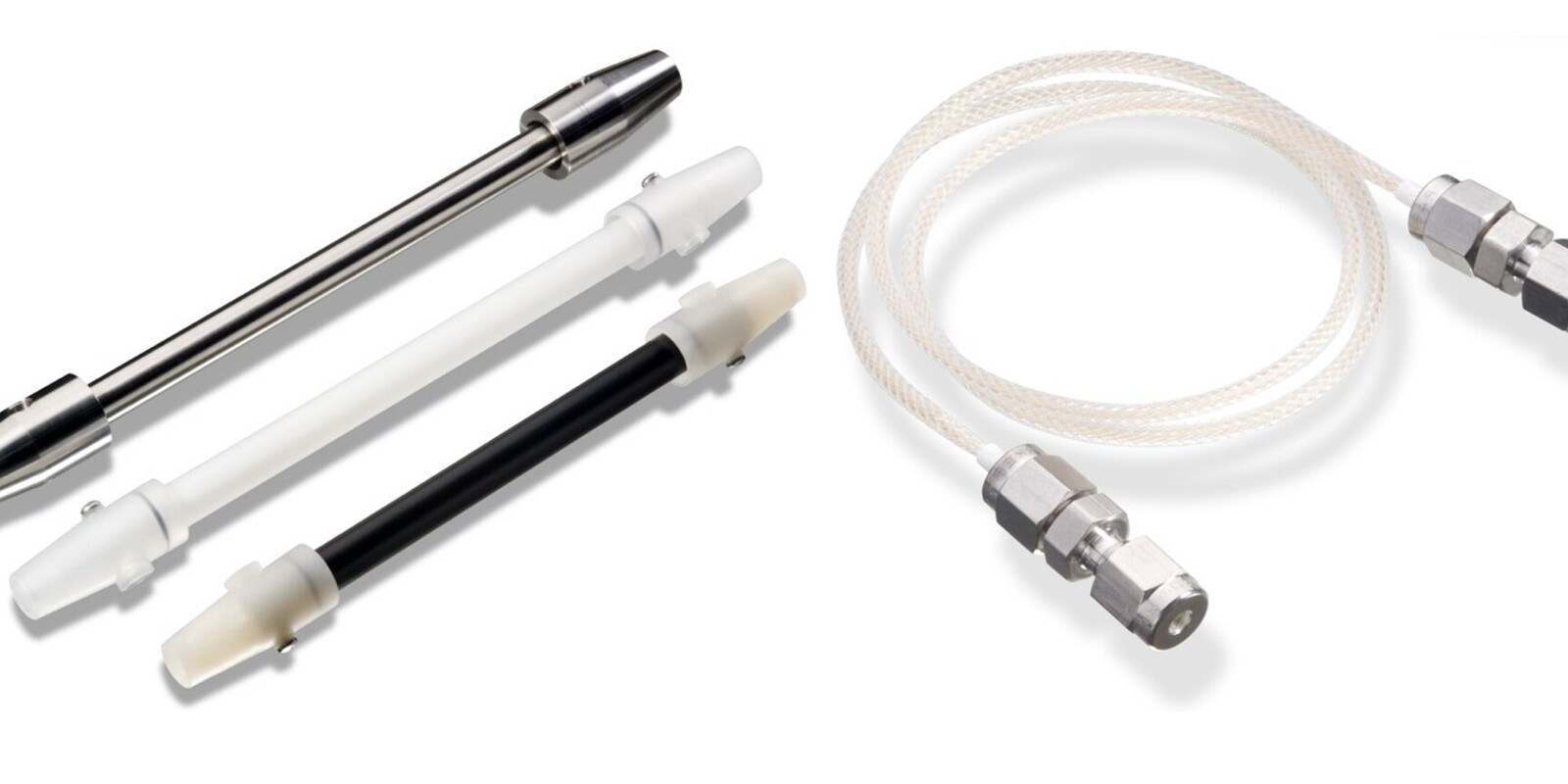

Precise emission measurements do not start at the analyzer – the path of the sample gas can already be decisive. With low CO measuring ranges, the heated sample line itself can become a source of interference, precisely when it is operated as hot as it should be. With the new TBX-H PerfectZero, AGT-PSG introduces a heated sample line that prevents exactly this effect.
Why sample lines are operated hot
The sample gas must stay above its water and acid dew point all the way from the sampling point to the sample gas conditioning system. This is the only way to avoid uncontrolled condensation, acid formation and the loss of water-soluble components. Holding temperatures of 180 °C are therefore common in continuous emission monitoring systems (CEMS): in sulfur-containing flue gases, the acid dew point can reach approximately 150 to 155 °C, depending on gas composition, moisture and SO₃ content.
PTFE has proven itself as the material for the sample gas path. It offers excellent chemical resistance, is hydrophobic and shows very little surface interaction – an advantage for low measuring ranges and demanding components such as NH₃, HCl or SO₂.
Where the CO comes from
At high continuous operating temperatures, the heater, the insulation and other line materials can release CO. Although PTFE is an excellent material for sample gas service, it is not completely gas diffusion-tight. As temperature increases, gases can permeate through the PTFE wall and enter the sample gas stream.
At holding temperatures of 180 or 200 °C, this effect can create an additional background signal in low CO measuring ranges and distort the measured value. For operators this means: part of the measured CO does not come from the process but from their own sample line.
The solution: a stainless steel barrier
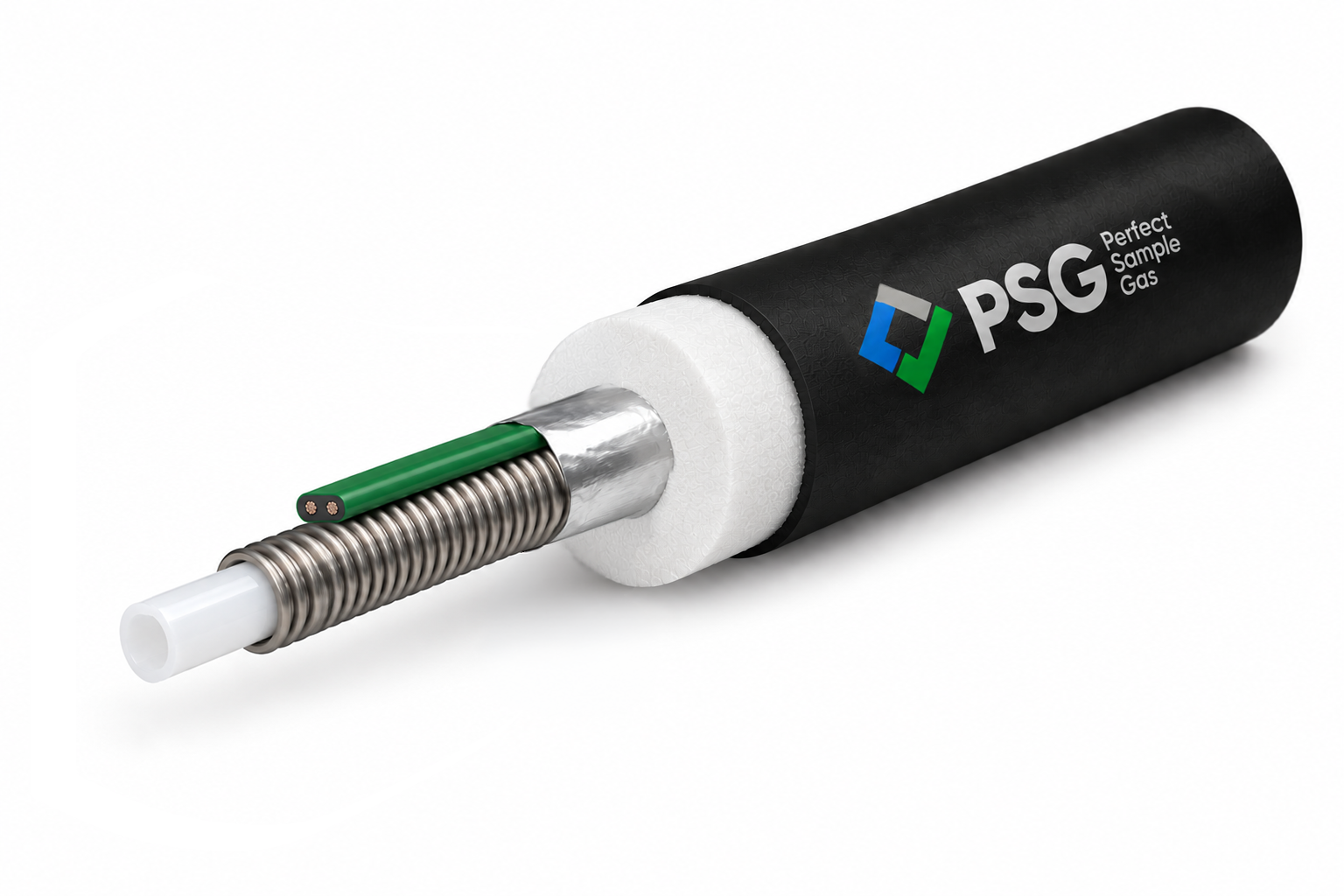
This is exactly where PerfectZero comes in. A flexible metallic diffusion barrier – a stainless steel corrugated tube – surrounds the PTFE or PFA sample tube and fully separates it from the heater and the insulation. The sample gas stream thus stays free of CO ingress from the line, even at holding temperatures of up to 200 °C (60 W/m heater).
How to detect a CO background from the line
A simple comparison shows whether your sample line contributes to the CO reading: apply zero gas once directly at the analyzer and once through the probe’s test gas connection – standard on PSG probes – while probe and line are at operating temperature. If the analyzer shows more CO when the zero gas passes through the entire sample path, the difference comes from the sample path and not from the process. Especially with low CO measuring ranges, this comparison is worthwhile before the next calibration or functional test.
More than a heated line: the TBX-H platform
The TBX-H combines the flexibility of a traditional hand-made corrugated line with the advantages of a modern extruded line:
Developed for practical use
The TBX-H PerfectZero is not a special solution for individual applications but a configurable platform. Two standard versions with PerfectZero barrier are available ex stock: with a replaceable 6×1 mm or 8×1 mm PTFE sample tube, a PVC Flex jacket and 200 °C holding temperature. Up to approx. 70 m the line is delivered as a coil in a carton, above that on a wooden drum. Lead time for standard versions is approx. two weeks without termination and approx. three weeks with termination – longer depending on capacity utilization.
The line is delivered ready for connection from the factory or terminated with the PSG termination kit directly in the workshop or on site. Even pre-terminated lines can be shortened later. It is controlled by an external temperature controller, such as the ST49 controller, which is pre-configured for PSG sample lines.
Where PerfectZero makes the difference
Whether your sampling point needs PerfectZero is answered by eleven questions in our printable selection guide. All technical data can be found in the TBX-H PerfectZero data sheet, more on heated sample lines in our case study.
Let’s talk: Book a meeting with Jonas Mayer or get in touch.